All about the coppery titi...
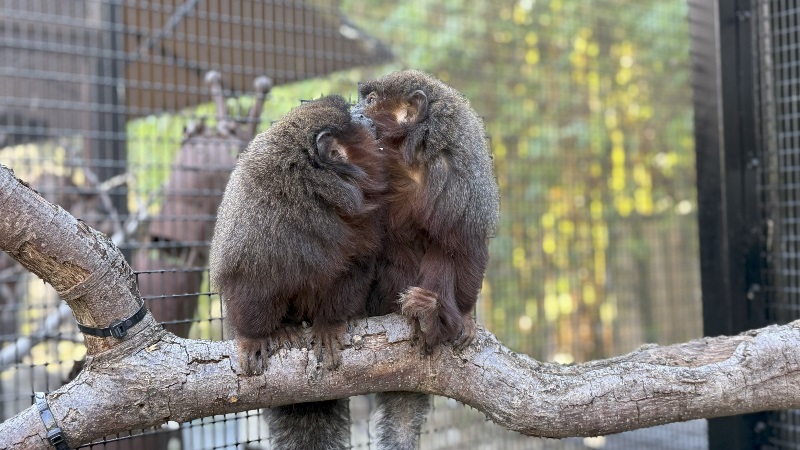
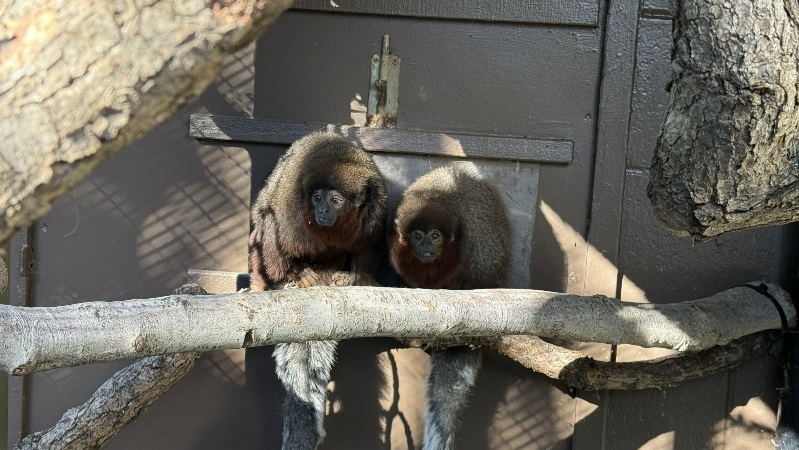
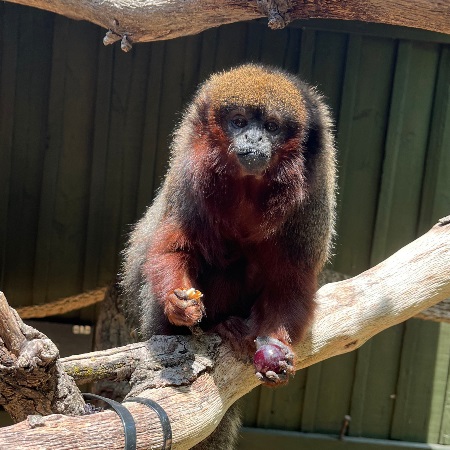
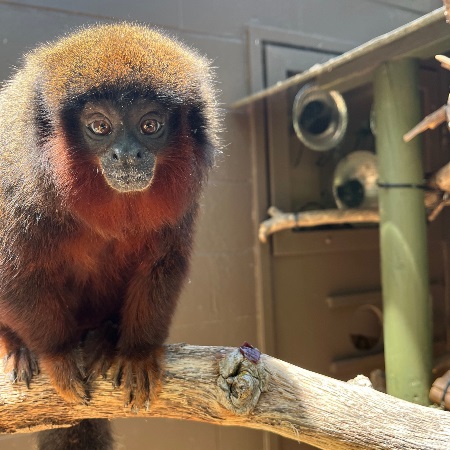
Coppery Titis have a thick coat of reddish-brown fur covering their bodies with the exception of their faces. Their coloring acts as camouflage- helping them hide from predators. Equipped with long tails, strong feet, and sharp claws, the Coppery Titi is well adapted to life in the trees making them an arboreal species. The tail helps with balance when the titi climbs trees and as a rudder when it jumps from tree to tree. Titis also use their tail as a flag to communicate social signals, often entwining it with tails of family members with whom they are socially bonded. Males and females are similar in size and are about a foot long with tails that are 14-25 inches long. They weigh around two pounds. Coppery Titis are diurnal, which means they are active during the day.
Diet
Like other neotropical primates, Coppery Titis are mainly fruit-eaters (frugivores) and spend almost 75% of their time in search of fruit while up in the trees. They also feed on insects.
Habitat
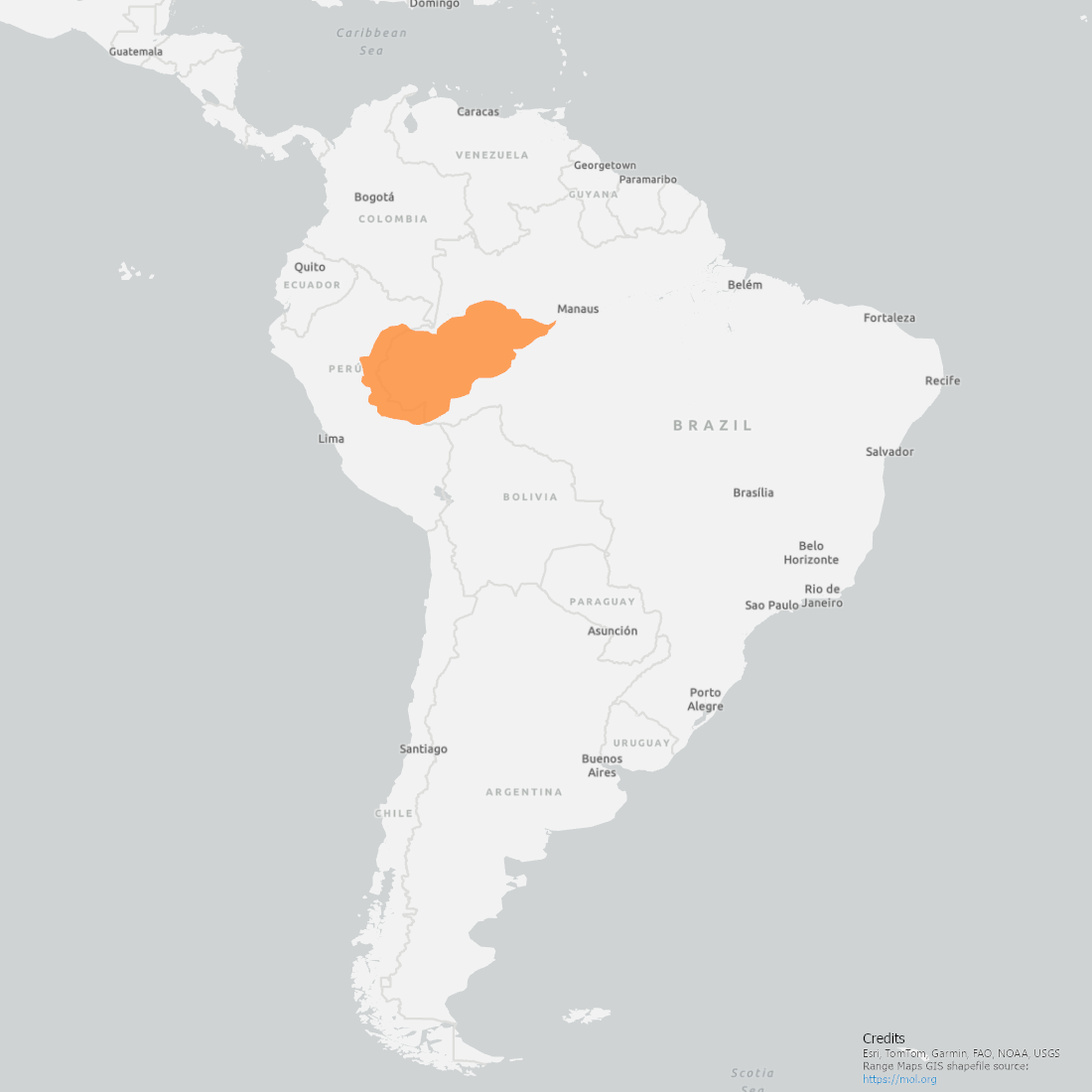
Coppery Titis are native to Peru and Brazil in South America and are found in dense tropical Amazonian rainforests.
Behavior
Reproduction
Coppery Titis form long term bonds and mating pairs live together with several generations of young. One infant is born every year between November and March. The young are weaned when they are about four months old. Males are the primary caregivers and predominantly take care of the infants. They commence their parental role a few hours after the infant is born, carrying them around and protecting them. The female’s only parental care role is nursing the infant.
Conservation
According to the World Conservation Union, Coppery Titis are only found in a remote region of the Amazonian rainforest that is isolated. As a result, they are not considered to be under any immediate threat.