All about the leopard tortoise...
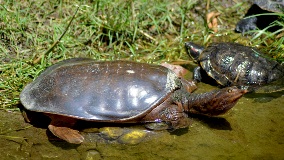
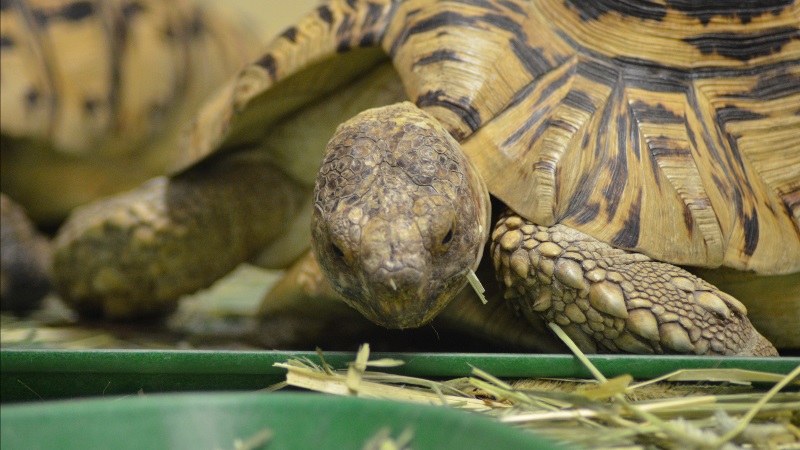
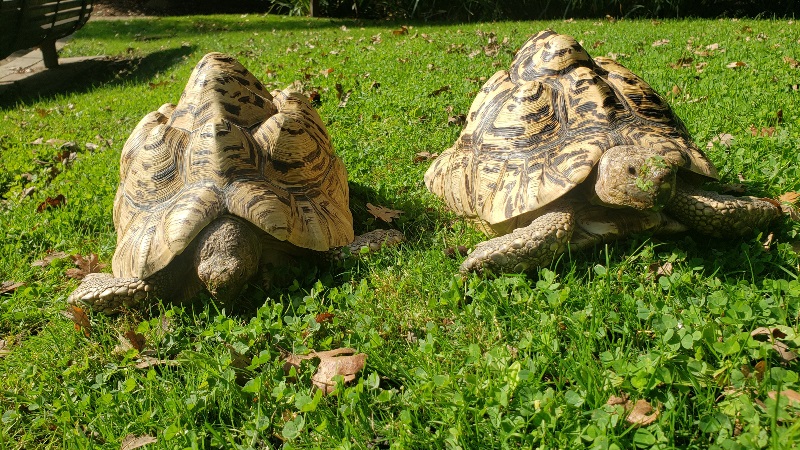
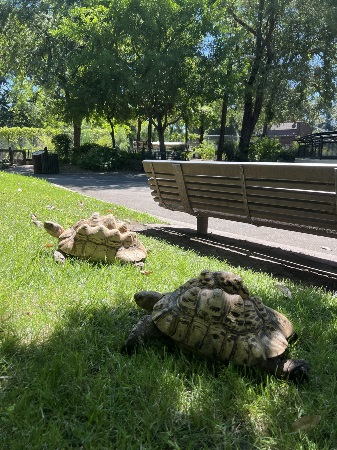
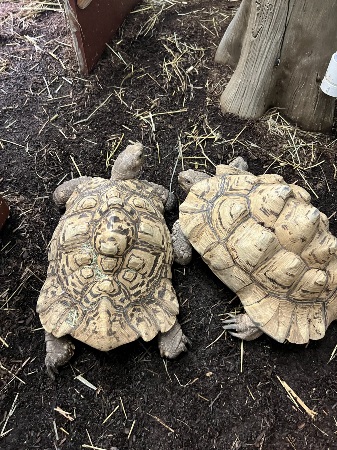
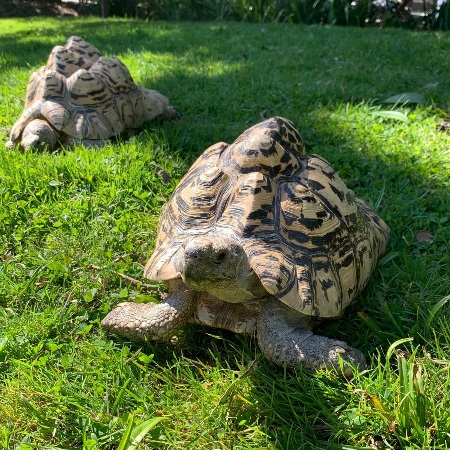
The Leopard Tortoise is a species of tortoise and, like other tortoises, has a shell that protects it from predators. It is the fourth largest tortoise in the world after the Galapagos (which is the largest), the Aldabra, and the African spurred tortoise. It has a yellow carapace with brownish-black blotches. Like other tortoises, Leopard Tortoises have blunt heads that look like tapering handles and well-developed legs. The carapace is usually around a foot and a half in length and they weigh around 30 pounds.
Diet
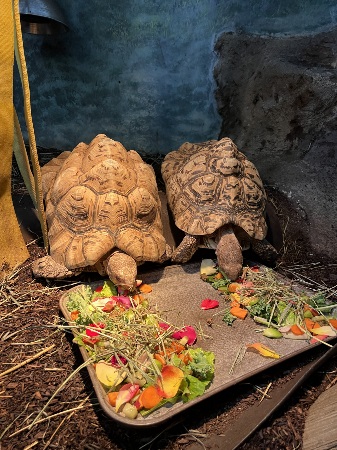
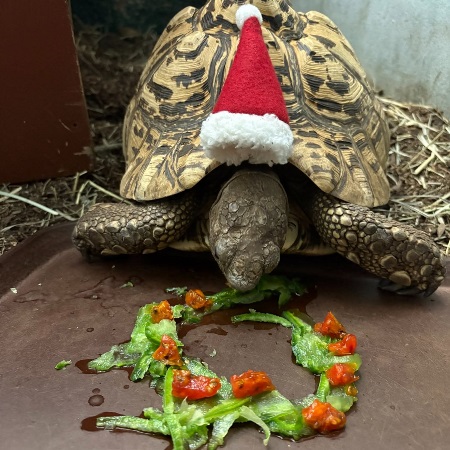
Since they are herbivores, they spend a considerable proportion of their time grazing. They mainly feed on leaves, seeds, grains, nuts, flowers, and succulents.
Habitat
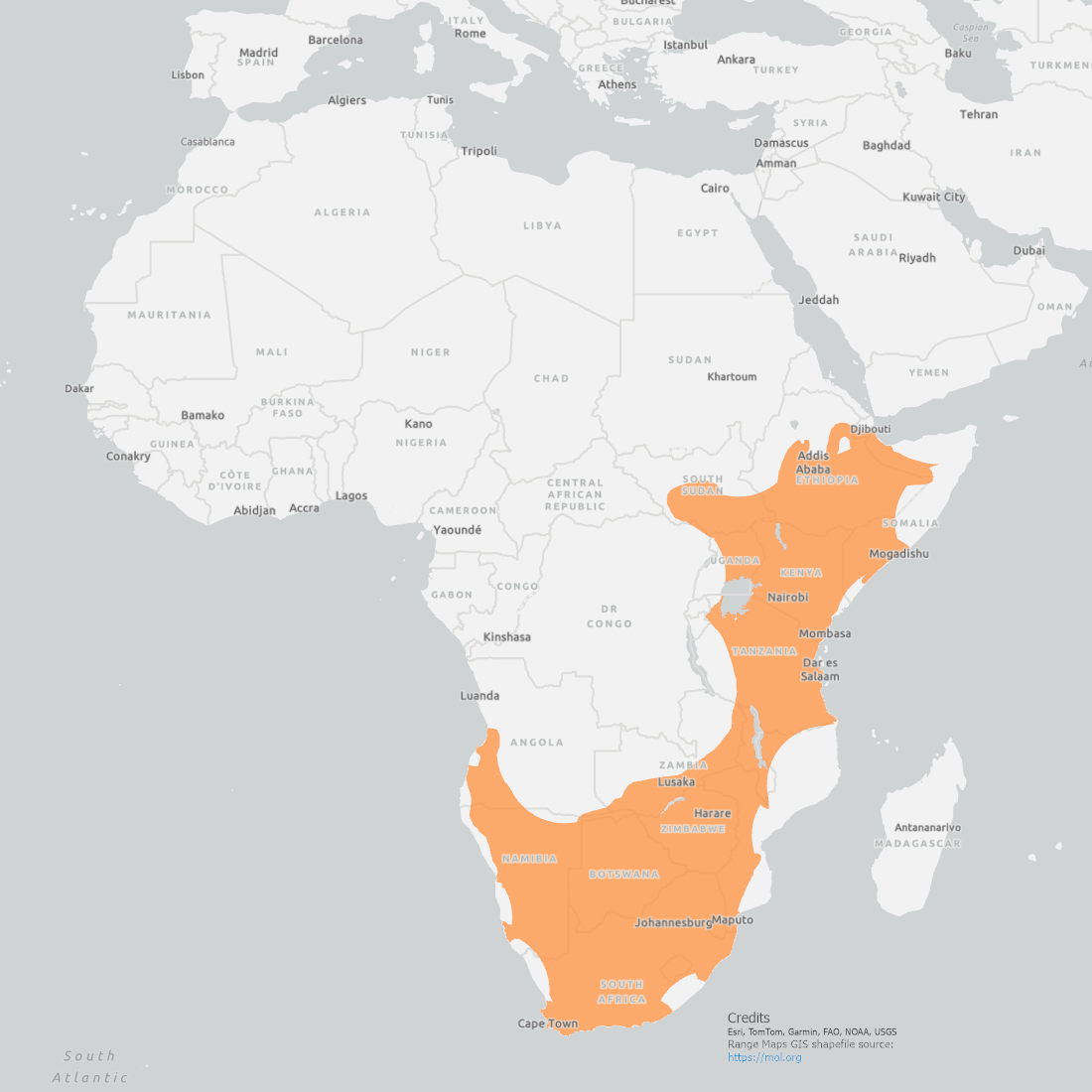
Leopard Tortoises are native to southern Africa (Mozambique, Malawi, Zambia, Angola, Democratic Republic of Congo, Rwanda, Burundi, Zimbabwe, Botswana, Namibia, and South Africa) and western Africa (South Sudan, Somalia, Ethiopia, Uganda, Kenya, Rwanda, Burundi, Tanzania). They are found in grassland and savanna-type habitats.
Reproduction
Breeding in Leopard Tortoises takes place from May to October. Males exhibit courtship behaviors and vocalizations to attract females and are known to aggressively compete with other males for females. They largely vocalize during the breeding season to warn off competitors. Females dig holes in the ground and lay five to 30 eggs in this nest covering them up at once. Tortoises do not incubate their eggs nor practice parental care. In the wild, hatchlings have to fend for themselves and are heavily predated upon.
Conservation
Since the Leopard Tortoises populations in
the wild are not affected by habitat fragmentation, they are
categorized as Least Concern by the International Union for World
Conservation.