All about the river cooter turtles...
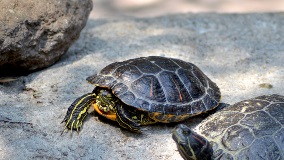
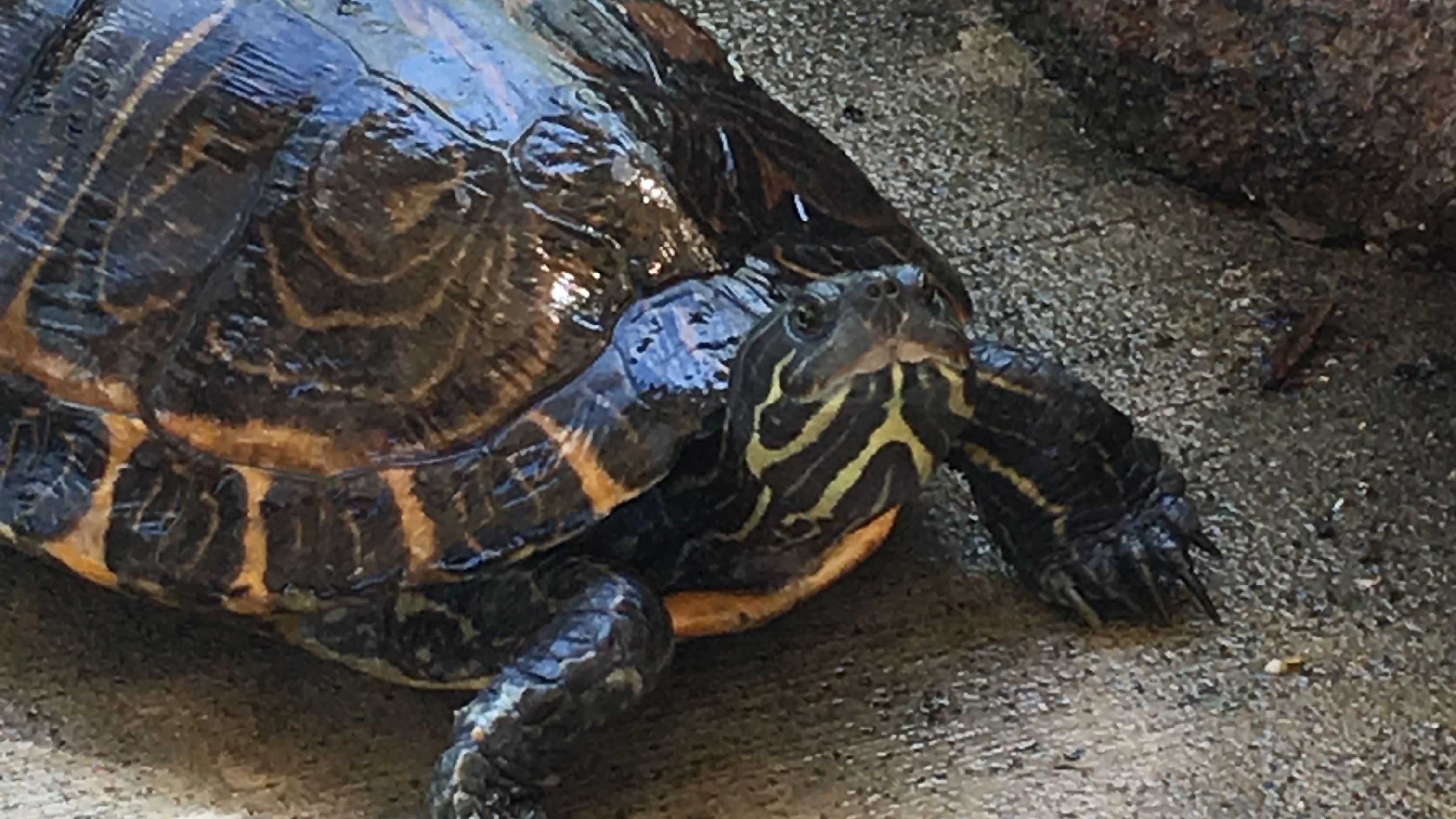
The River Cooter is a medium-sized turtle with a flat, elongated, and oval-shaped carapace. Like other tortoises, River Cooters have a smooth shell but of a sleeker build, which helps protect them from predators. Since turtles spend a considerable portion of time swimming in the water, their sleeker build helps them swim more efficiently. They have a brightly colored carapace patterned in dark green, dark brown, pale yellow, and black. They have blunt heads that look like tapering handles and long sturdy legs.
Although males and females are similar in color, shape, and form, the females are considerably larger than the males, while the males have longer claws than the females. They are usually around a foot and a half in length and weigh up to 11 pounds.
Diet
River Cooters are predominantly herbivorous feeding on several types of aquatic vegetation.
Habitat
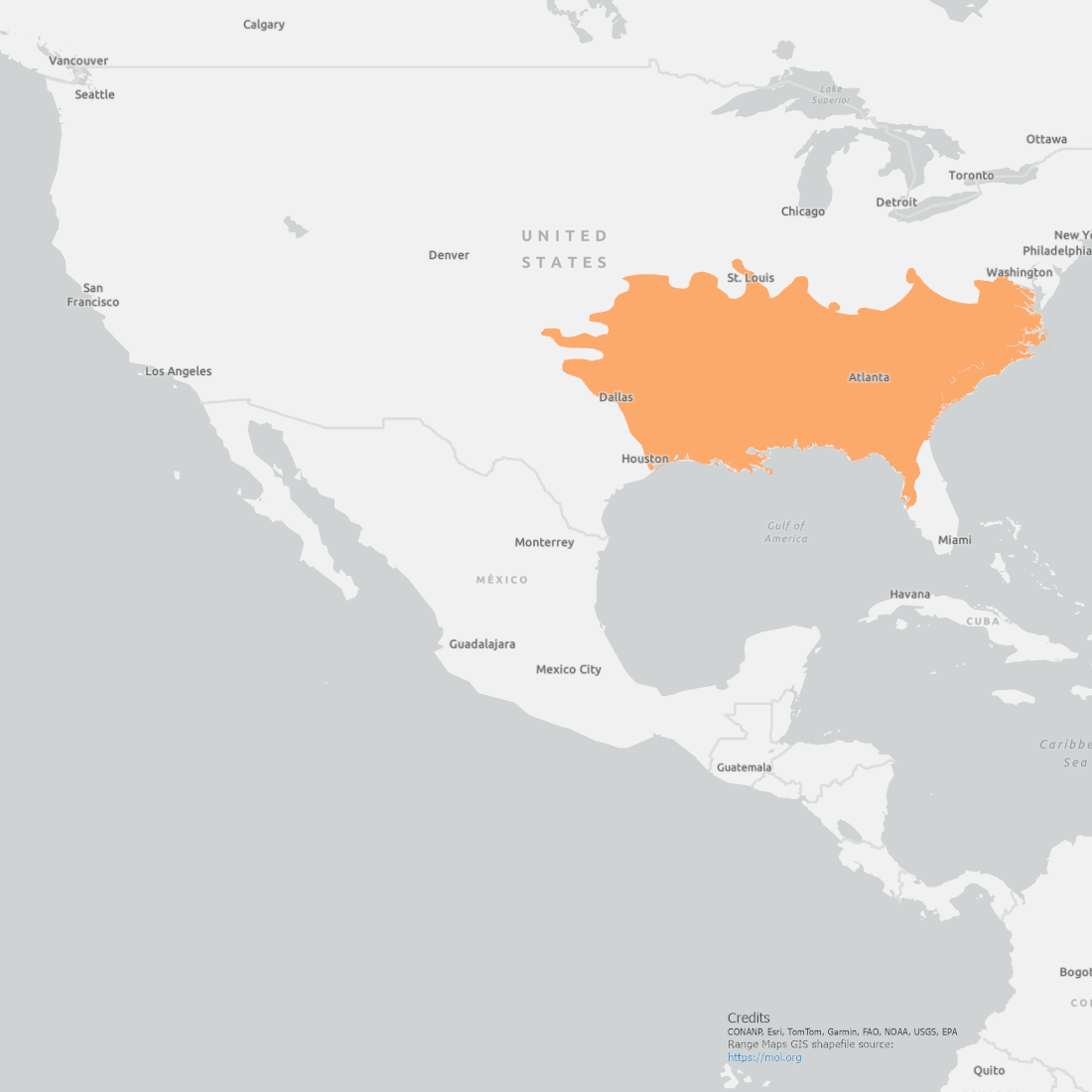
River Cooters are endemic to the United States (West Virginia, Virginia, Texas, Tennessee, South Carolina, Pennsylvania, Oklahoma, Ohio, North Carolina, Missouri, Alabama, Arkansas, Florida, Georgia, Illinois, Indiana, Kansas, Kentucky, Louisiana, and Mississippi). They live in freshwater and brackish water habitats which include rivers, streams, lakes, marshlands, swamps, and ponds.
Reproduction
Breeding in River Cooters takes place from late spring to summer. The males have elongated fore claws that they constantly move in order to attract females. Breeding takes place in the water and females come ashore to dig nests and lay their eggs. They are known to lay 10 to 20 eggs in a breeding season. Parents do not incubate the eggs or care for their young and hatchlings are independent from the time they hatch heading directly toward a water body where there is a lesser likelihood of them being predated upon. Males sexually mature at 13 years of age while females do so when they are around six years of age.
Conservation
Some of the threats that influence River Cooter populations in the wild include illegal hunting for food consumption, road mortality, dredging, mining, and industrial and agricultural practices. Although concern has been raised about localized population decline, since global population levels are stable, they are categorized as Least Concern by the International Union for World Conservation.