All about the western pond turtles...
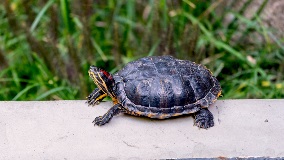
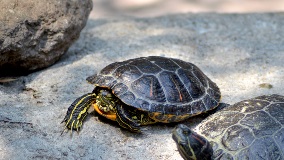
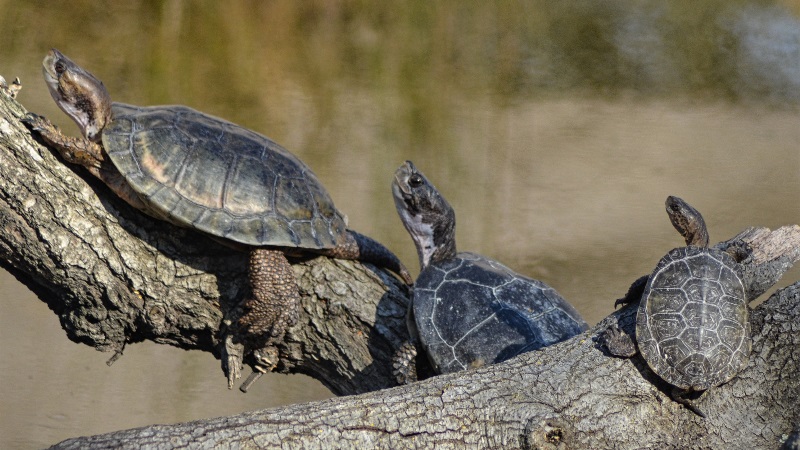
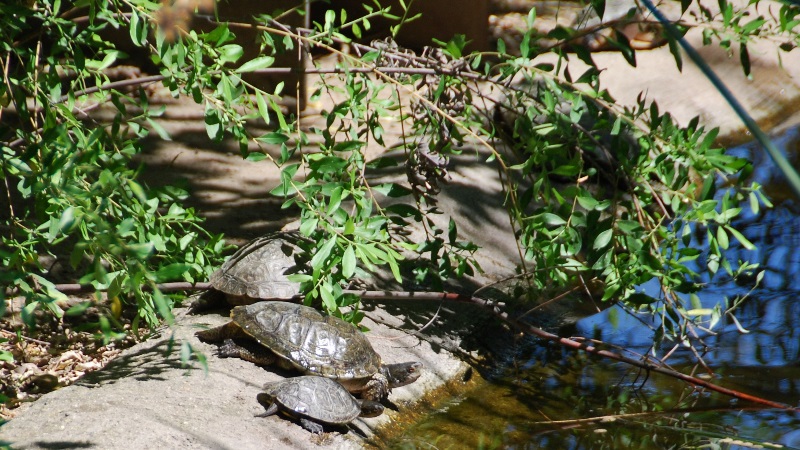
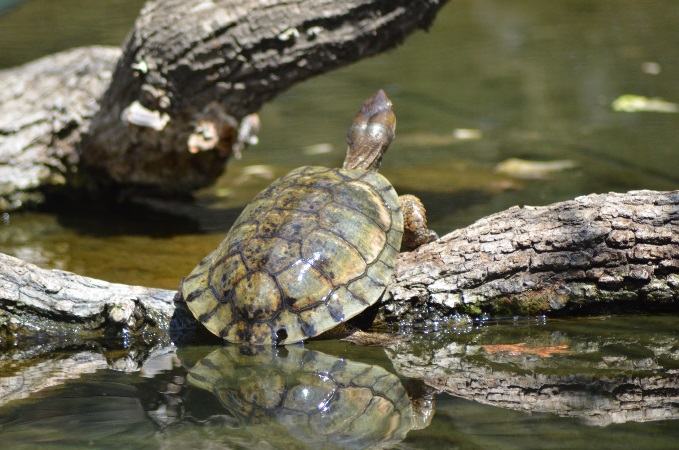
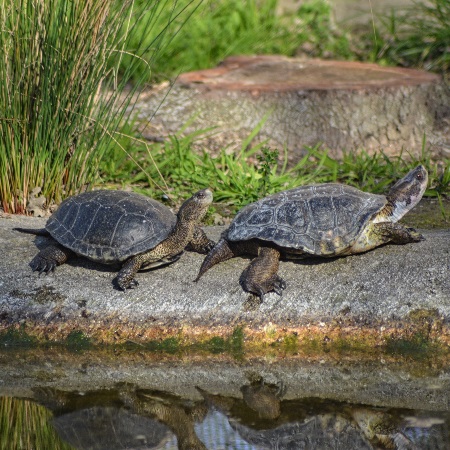
The Western Pond Turtle also called the Pacific Pond Turtle, lives along the Pacific Coast of North America. Like the tortoises, these turtles have smooth shells, but of a sleeker build, that protects them from predators. Since turtles spend a considerable proportion of their time swimming in the water, their sleeker bodies help them swim more efficiently. They have olive green or dark brown carapaces with pale yellow plastrons. Their legs and necks are olive green or dark brown speckled with pale yellow. They have blunt heads that look like tapering handles and well-developed legs. Their carapaces are usually around ¾ of a foot in length and they weigh about two and a half pounds.
Diet
They are omnivorous mainly feeding on aquatic invertebrates, fish, and pond vegetation. Young Western Pond Turtles are carnivorous predominantly feeding on aquatic invertebrates.
Habitat
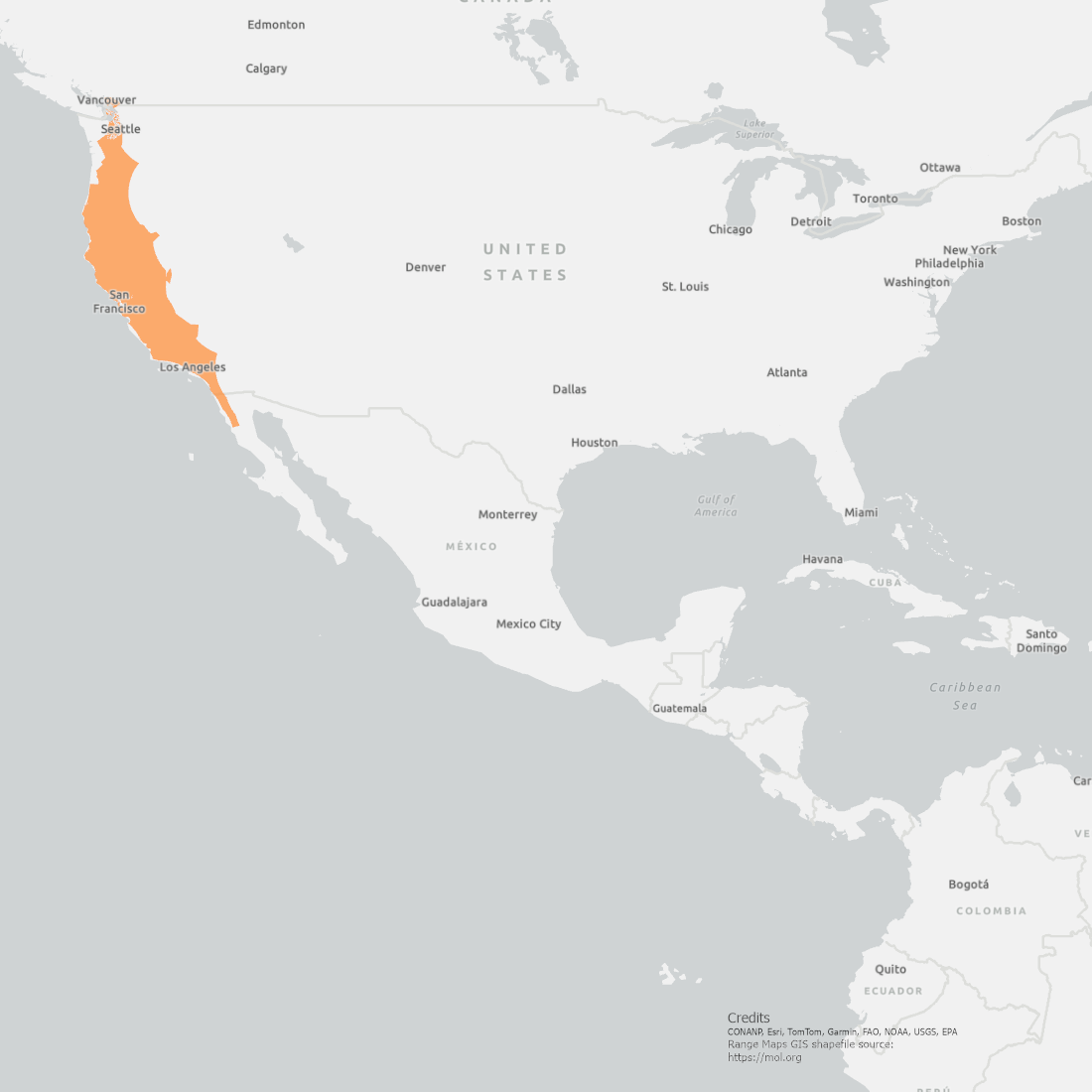
Western Pond Turtles are endemic to the Pacific Coast of North America (Mexico and the United States of America) from the state of Washington through the states of Oregon and California in the USA to Baja California in Mexico. They live in freshwater habitats coming onshore to bask in the sun.
Reproduction
Unlike mammals, and like other reptiles, Western Pond Turtles cannot thermoregulate. In the cold winter months, these turtles sink to the bottom of the water bodies they live in and slow down their activity levels to become almost dormant. This behavior is called brumation. When the climate starts warming up in spring, they emerge to bask in the sun.Western Pond Turtles breed from late spring to summer. Breeding takes place in the water, after which the females come ashore to dig nests to lay their eggs. They are known to lay two clutches of eggs each breeding season. Parents do not incubate or care for their young and hatchlings are independent from the time they have hatched, heading directly toward a water body where they are lesser likely to be predated upon. Males and females sexually mature around eight years of age.
Conservation
Since wild Western Pond Turtles’ population numbers are still in decline, the International Union for the Conservation of Nature has categorized them as Vulnerable. The main factors that influence their population decline are, habitat destruction and fragmentation due to human pressure, pet trade, natural disasters caused by drought, fires, and flooding, and competition with invasive species such as the red-eared sliders. The U.S. federal government has not added this species to its endangered species list due to the dearth of scientific research on this species. In the last 20 years, this species has been considered extinct in Canada. In the states of Washington and Oregon where their wild population numbers have depleted considerably, they are listed as endangered and sensitive with critical standing respectively. The California Department of Fish and Wildlife have also listed them as species of special concern. Since the mortality rate of turtle hatchlings is high, to conserve the species the state forest departments of California, Oregon, and Washington collaborated with some universities and zoos within their states 20 years ago to start the head-start program. This program focuses on the collection of turtle eggs from the wild that are taken to zoos where they are incubated. Hatchlings are protected from natural predatory pressures and reintroduced to their respective wild habitats when they are larger and less likely to be predated upon.
The Association of Zoos and Aquariums (AZA)
is focused on conserving Western Pond Turtles as one of their SAFE
(Saving Animals From Extinction) species. Zoos across the United
States, Canada, and Mexico are involved in their program and several
are selected to breed their turtles to increase their population in
the zoo community. AZA’s SAFE is also linked with other zoos
globally and several individuals have been moved internationally to
add new genes to increase genetic diversity. AZA SAFE proactively
supports the assessment of western pond turtle populations and their
threats, engages the public, and supports works that will increase
the number of turtles living in natural areas in the species range.