All about the snow leopard...
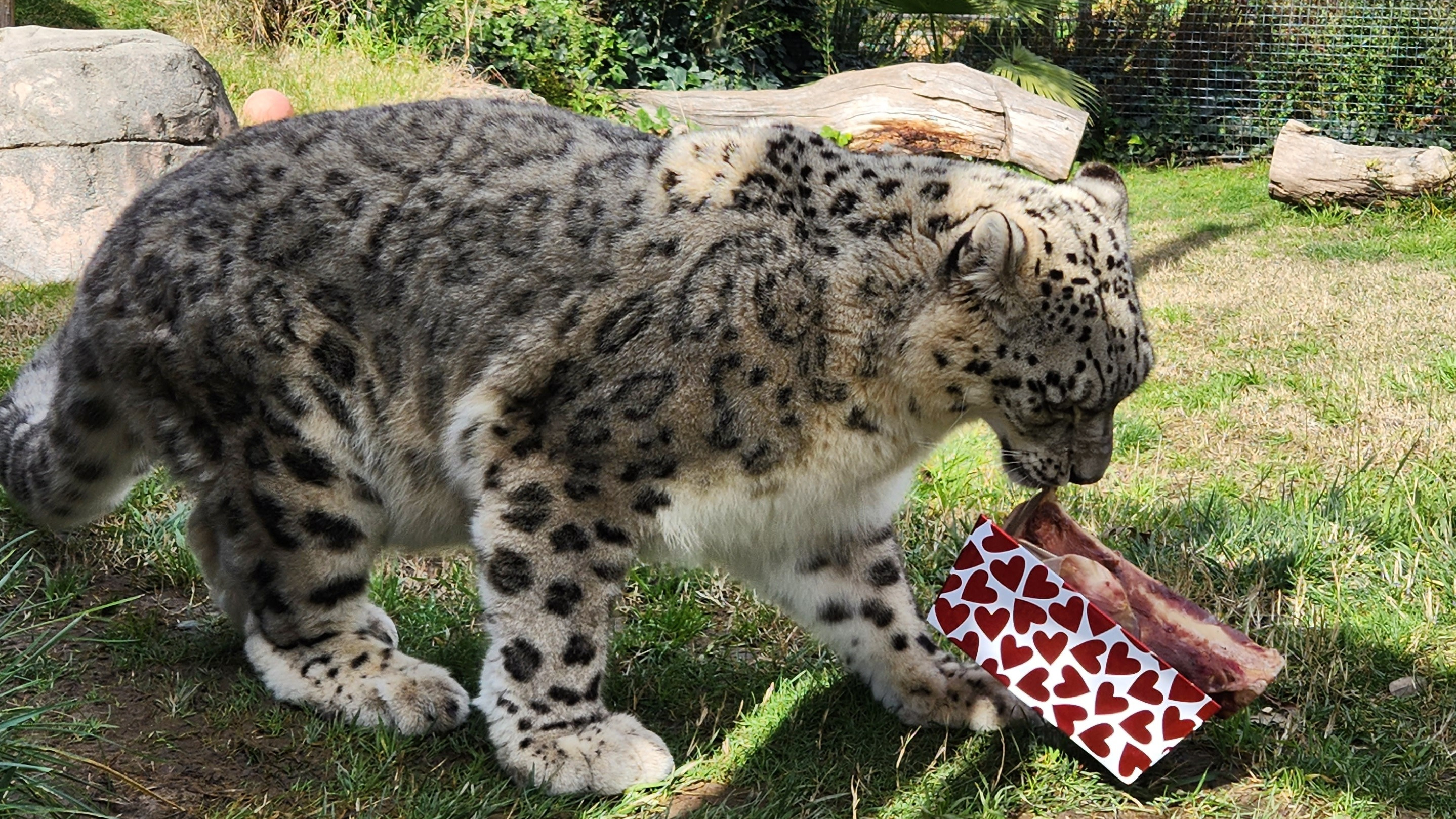
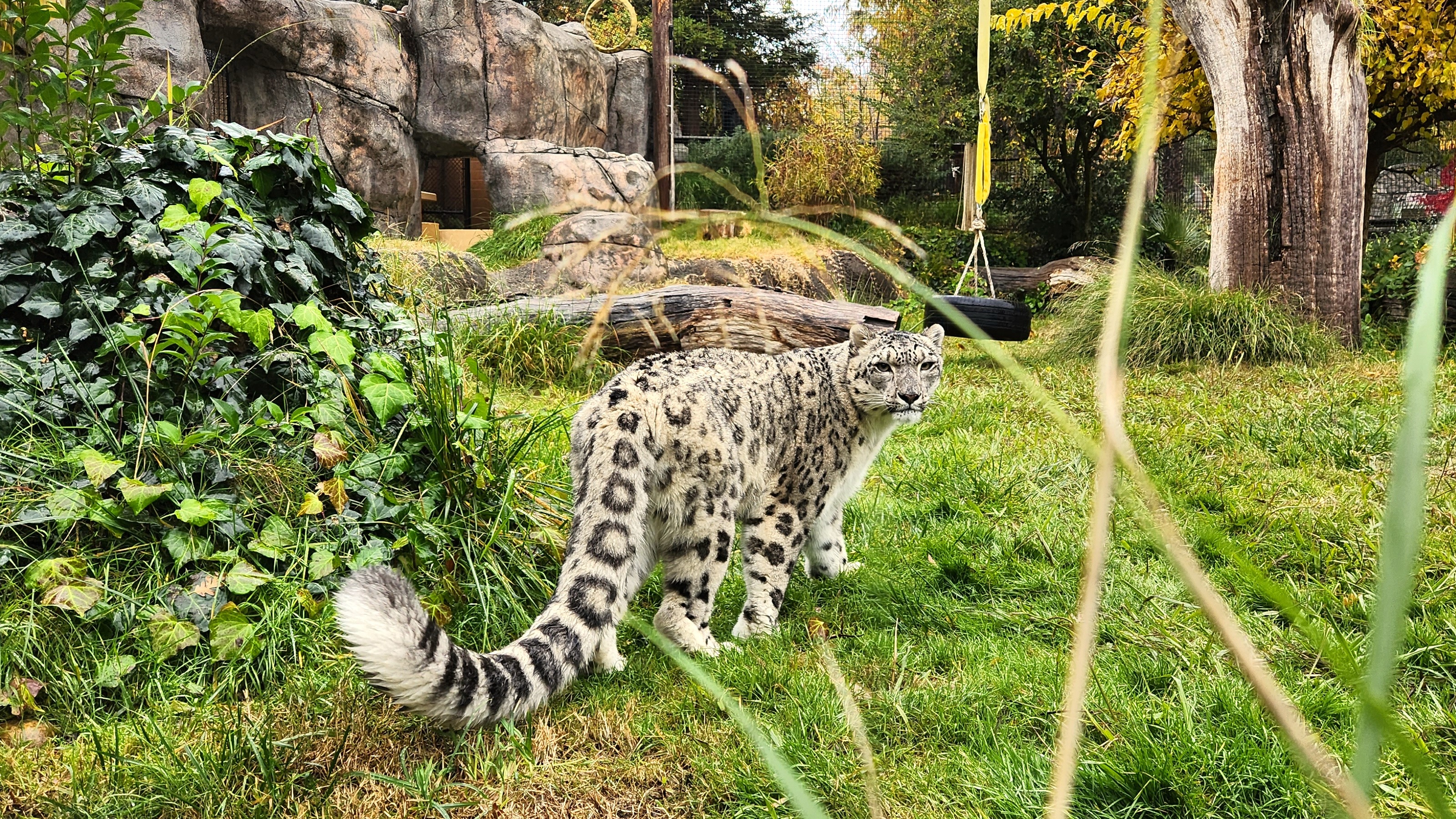
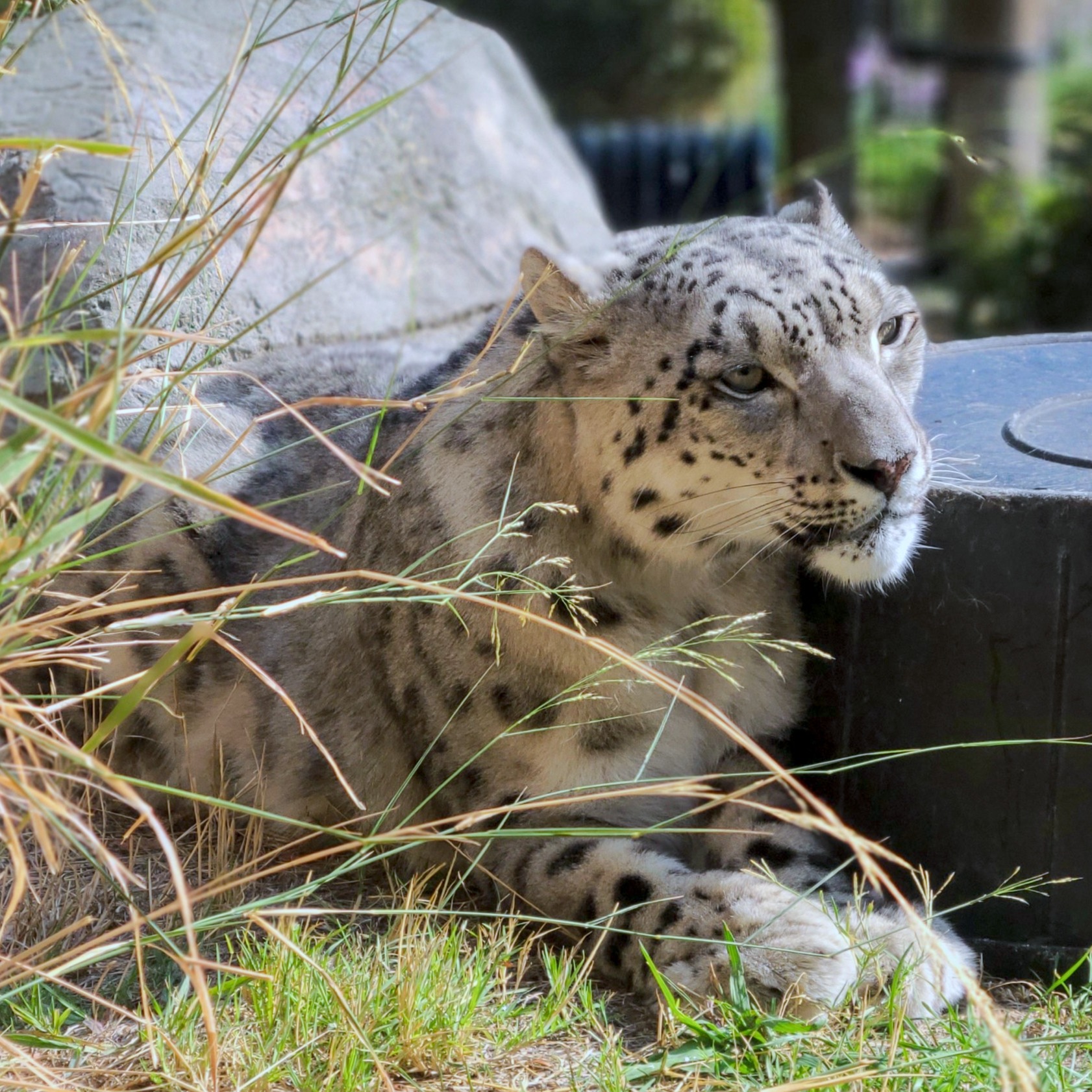
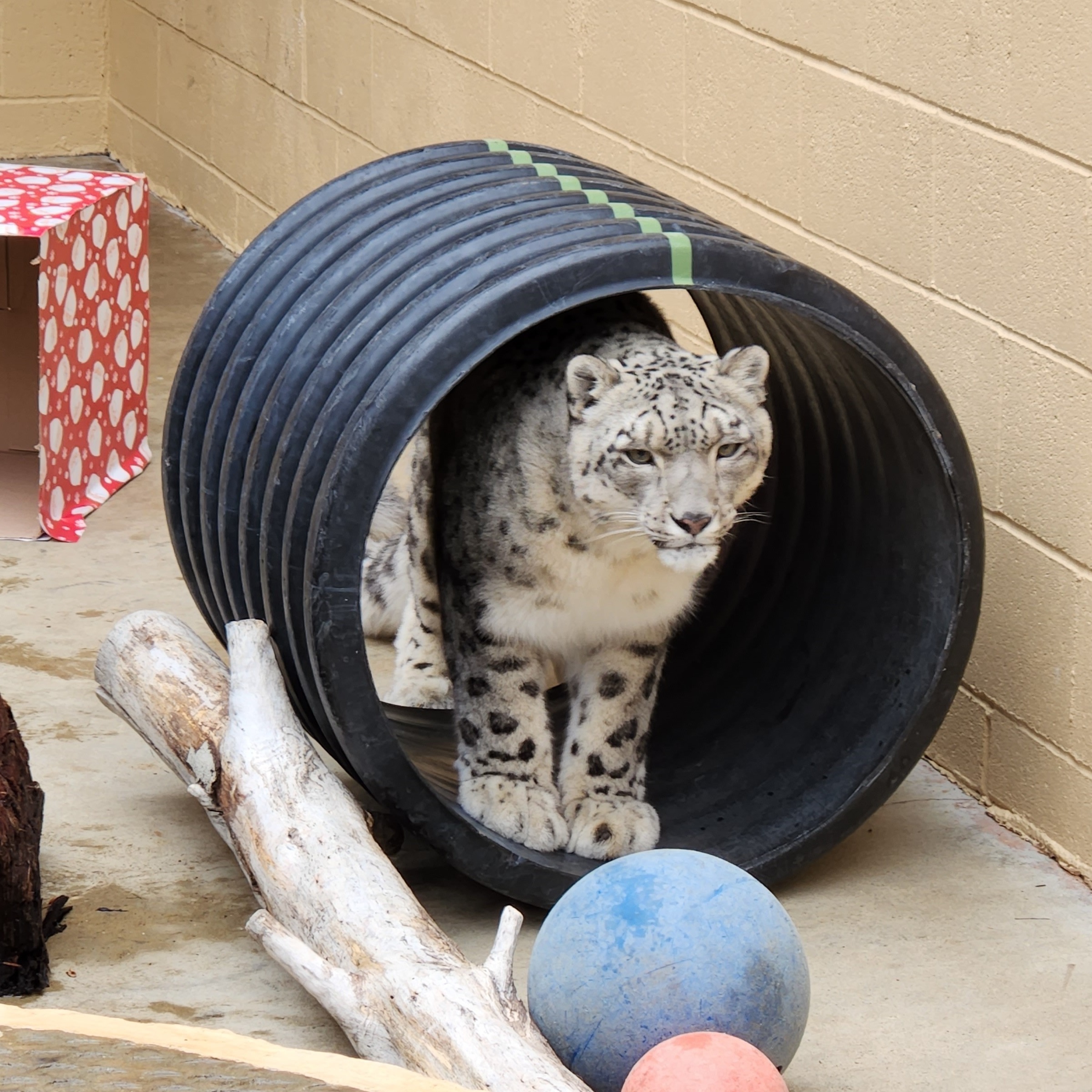
Snow leopards are smaller than other large cats; males only growing to 100-155 pounds and females from 60-120 pounds. Despite their small size, they are well adapted to living in a severe mountain habitat. Their fur is long and thick, with wooly undercoat for extra warmth. The fur is soft gray to light brown, and the head and lower limbs are marked with black or brown spots. The body is covered with brown, dark grey or black rosettes ringed in dark brown or black. These markings provide excellent camouflage both in snow and among rocky terrain. The rounded paws have large hairy pads that act as snowshoes and also protect the paws from rocks. The snow leopard uses its long tail for balance and for extra warmth when wrapped around itself. They have an enlarged nasal cavity which helps them warm the cold air as they breathe and retain water.
They have short forelimbs and long hindlimbs, making them agile in steep terrain. Snow leopards are also superb jumpers. When stalking prey, they can easily leap distances of 50 feet and up to 20 feet high.
Lifespan is 10-13 years in the wild and about 20 years in captivity.

Diet
Snow leopards are carnivores. In the wild, they eat a variety of mammals and birds including: ibex, blue sheep, musk ox, hares, marmot, ptarmigan, and pheasant. At the Zoo, the cats are fed a diet of fortified horse meat. This muscular, well-built cat can bring down prey more than three times its size.
Habitat
Snow leopards live at high-altitude alpine and sub-alpine mountain ranges of the Himalayas including Nepal, China and Central Asia.
Status In The Wild
Snow leopards are listed as endangered by IUCN and on Appendix I of the CITES. A recent census estimated that there are 4,500 – 7,000 left in the wild. It is difficult to determine their exact number as they are so elusive and blend in with their environment. Illegal poaching is a major threat to their population. Snow leopards are killed for their fur and for bones which are used in traditional medicines. Other threats include loss of prey and human conflict, as snow leopards sometimes prey on domestic livestock and are killed by herders in retaliation.
The San Francisco Zoo is partnered with the Snow Leopard Conservancy, an organization that works in seven snow leopard range countries to address human-animal conflicts and empower local communities to protect this incredible species. The zoo has also had a very successful breeding history of snow leopards, producing 30 snow leopards since 1969.
Conservation
Snow Leopards are categorized as Vulnerable by the World Conservation Union because of depleting numbers, loss of habitat, human habitation and reduced number of prey. Another significant concern is illegal hunting of this species for its fur.
The Association of Zoos and Aquariums (AZA) is focused on conserving snow leopards through their Species Survival Plan (SSP). Zoos across the United States, Canada, and Mexico are involved in their program and several are selected to breeding their felids to increase the snow leopard population in the zoo community. AZA’s SSP is also linked with other zoos globally and several individuals have been moved internationally to add new genes to increase genetic diversity. AZA also focuses on conserving snow leopards by being a part of the Wildlife Trafficking Alliance. Through this alliance they work with their partners to reduce, and eventually eliminate, the illegal trade of wildlife and wildlife products
Support Conservation efforts of organizations like the Snow Leopard Conservancy, Snow Leopard Trust, World Wildlife Fund, and AZA-Accredited Zoos.