All about the giant Madagascar day gecko...
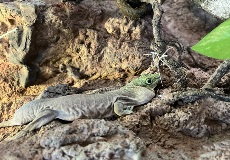
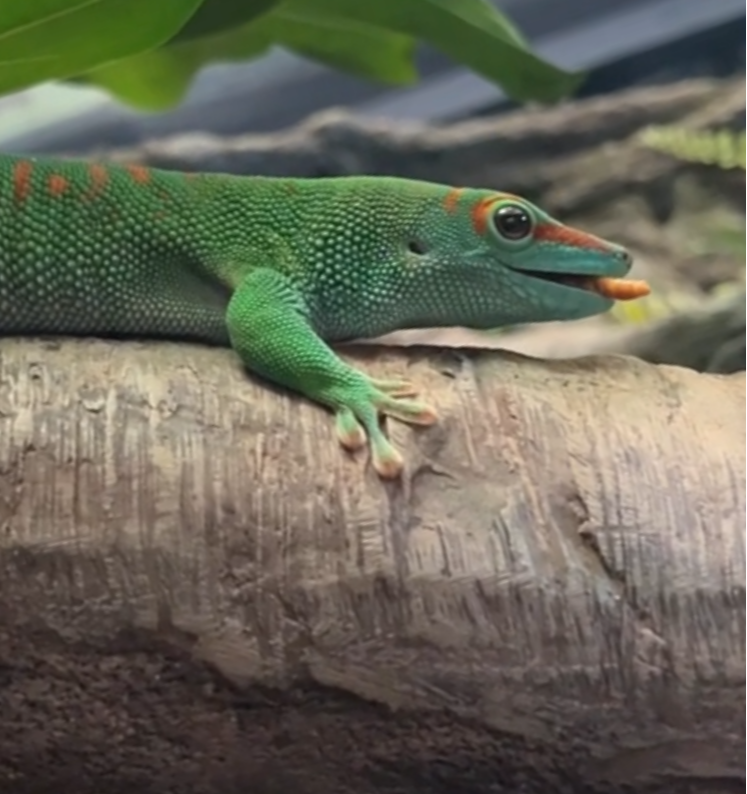
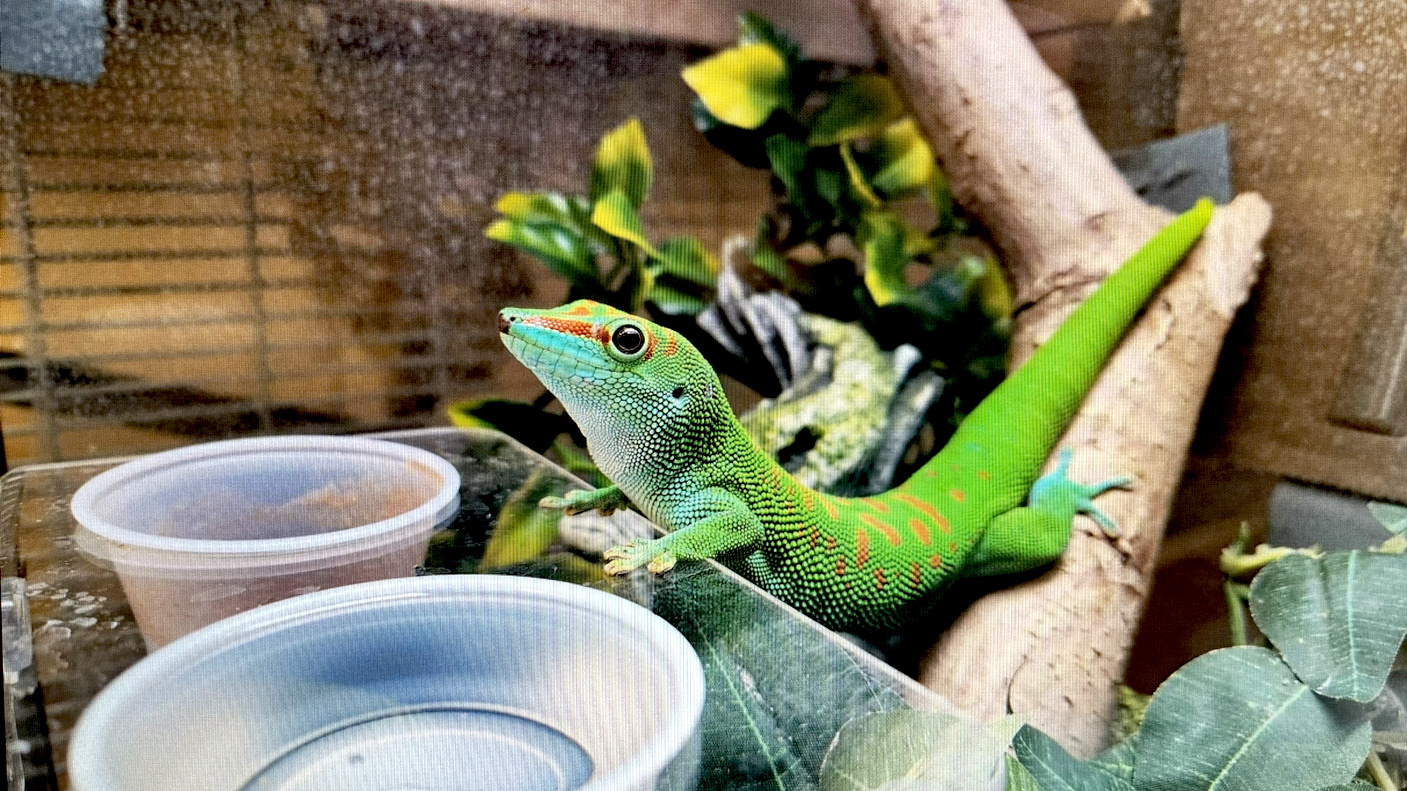
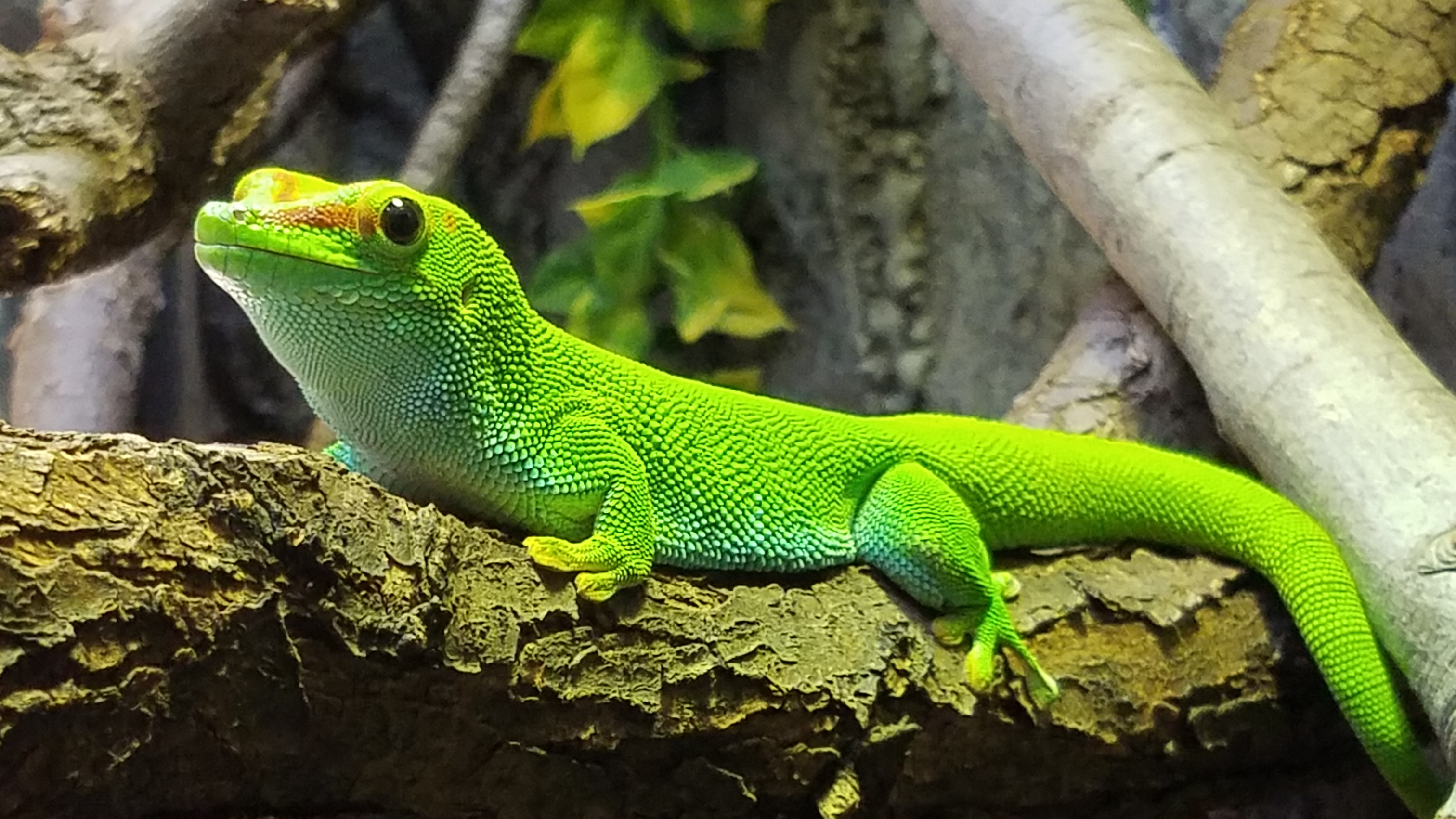
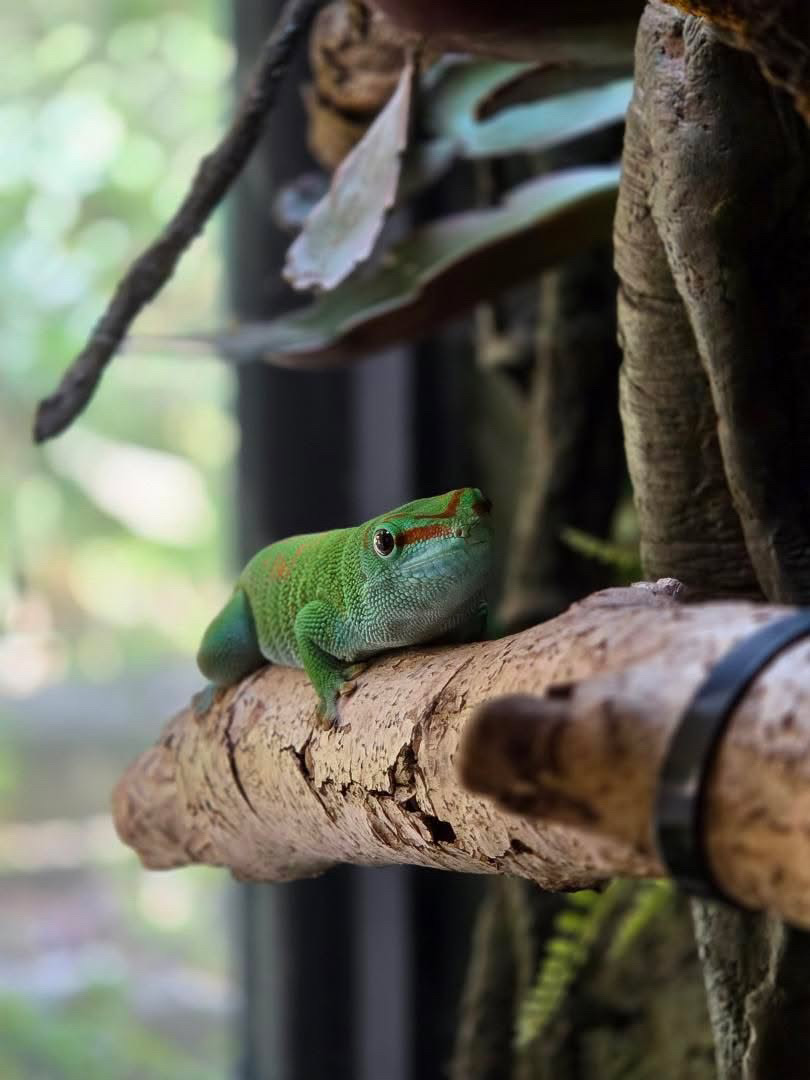
Giant Madagascar Day Geckoes are considered to be one of the largest species of day Geckoes. They are iridescent green in color with a red marking on the head and red dots on their torso. They also sport a tapering red line that runs from their nostrils to their eyes. Their underbelly is cream to pale yellow in color. Their heads and bodies are bright green to turquoise in color. Their eyes are encircled with black. They have unique feet that have their undersurface lined with lamellae, a thin-plate tissue. Lamellae help day geckoes walk vertically and inverted on smooth surfaces such as glass. Lamellae also help geckoes in respiration.
Males and females look different from one another (sexually dimorphic). Males have distinguishable sex organs in their anal area. Females have chalk sacs on either side of their necks in which they store calcium that they use to build their eggs. They are 10 inches in length and they are very light (50 to 70 grams in weight).
Diet
They are omnivores feeding on insects, other invertebrates, fruits, pollen, and nectar.
Habitat
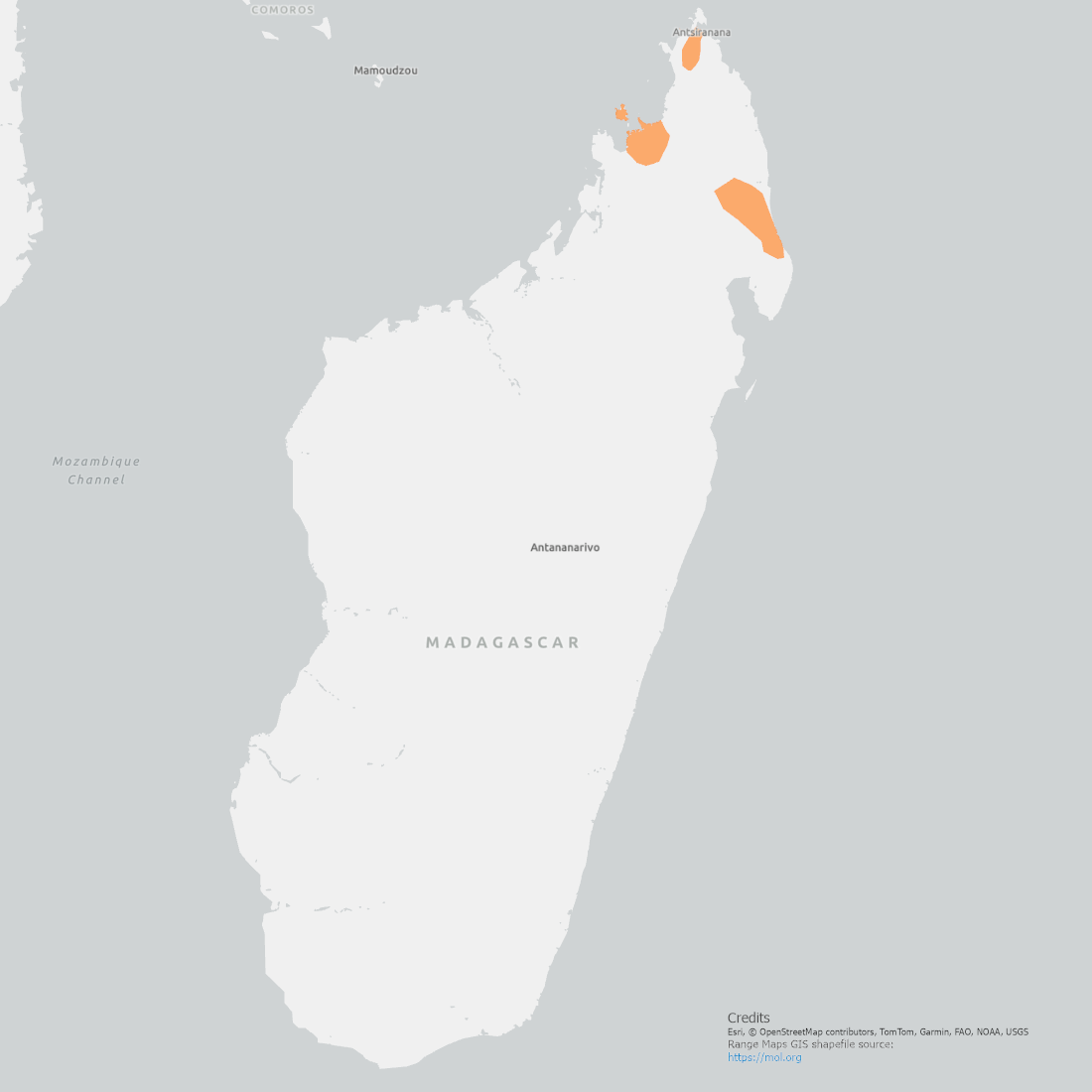
They are native to and only found in Madagascar living in native tropical rainforest and degraded forest habitats.
Behavior
They are active during the day (diurnal) and live in trees (arboreal). Unlike mammals, geckoes cannot thermoregulate. They are often seen basking in the sun to warm up. Their body color helps them hide from predators in their natural habitat (camouflage). Males are highly territorial and they will fight with other males to protect their food resources and their females. Uniquely, it has been observed that females tend to display territorial displays against other females, an uncommon behavior for female geckoes.
Reproduction
Giant Madagascar day geckoes lay eggs that hatch in two months. They sexually mature at one year of age.
Conservation
Since the giant Madagascar Day Gecko populations in the wild have been estimated to be currently stable, they are categorized as Least Concern by the International Union for World Conservation.